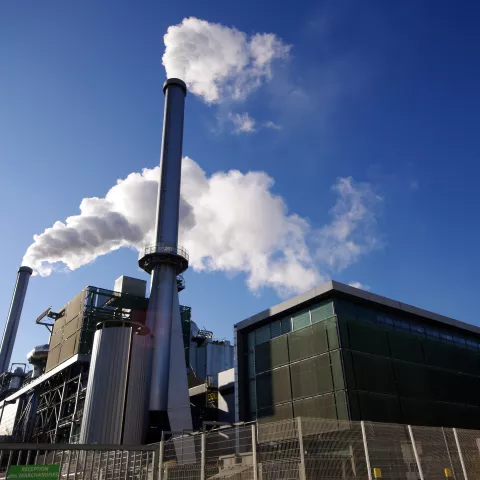
Located in Europe, this municipal solid waste incinerator (MSWI) consists of four lines each burning 15 metric tons of waste per hour. Following the enactment of stricter emissions regulations, the site faced the challenge of reducing SO2 concentrations to below the emission limit values (ELVs).
An existing semi-wet/spray dry absorber (SDA) process already used Sorbacal® Q. Together with the plant staff, Lhoist proposed boosting this process with a dry injection of Sorbacal® SP (3/4 dry process). A trial was conducted to determine the proposal’s potential benefits. We supplied the following technical assistance and expertise:
Technical assistance:
- Delivery and installation of mobile injection units.
- Setting up a mobile laboratory to measure the concentrations of inlet and outlet acid gases.
Expertise:
- Identifying the optimum Sorbacal® SP injection point with respect to the semi-wet process builder.
- Performing the trial and follow-up in cooperation with the plant’s technical team
The plant opted for a 3/4 dry process. Four 50 m3 Sorbacal® SP storage silos and dosing units were installed. The sorbent injection regulation scheme was adapted to take advantage of both semi-wet and dry processes.
The trial demonstrated that injecting Sorbacal® SP before the existing process would allow the site to meet applicable ELV standards with less overall sorbent consumption.
Moreover, there would be no increase in total sorbent costs, including reagent procurement costs and residue stabilization costs.The MSWI succeeded in cutting its previous SO2 emissions above the ELVs by a factor of more than five, by adding only 20-25% of Sorbacal® SP to the total hydrated lime dosed during the process.
The plant is now fully compliant with regulations and has optimized its sorbent consumption.