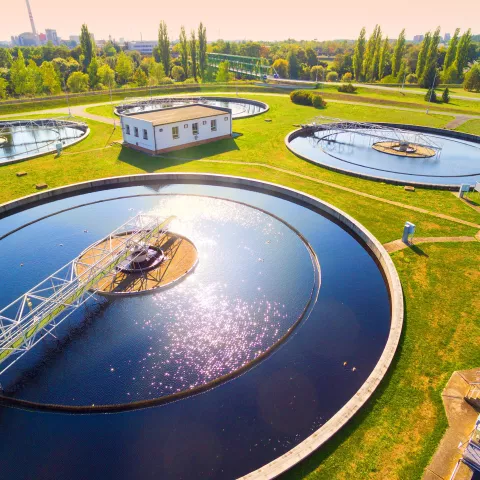
Industrial wastewater is the water that originates from industrial processes and is treated on-site (pre-treatment) to be recycled or further treated at a municipal wastewater treatment plant or discharged into a natural body of water.
Wastewater treatment is the process of removing contaminants from wastewater. It includes physical, chemical and biological processes to eliminate pollutants. Once treated, water can then be discharged back into nature or recycled. At Lhoist, we provide specific solutions for optimizing the wastewater treatment of industrial purification plants.
The purpose of neutralization is to adjust the pH value to meet the requirements of the different processing units in the wastewater treatment system. At Lhoist, we treat wastewater using lime-based reagents that allow us to raise the pH.
Fluoride-bearing wastewaters often require treatment beyond simple pH neutralization due to widely imposed limits on fluoride concentration in industrial effluents. The most common method for removing fluoride is through the addition of lime.
Sulphate contributes to increased surface water salinity, can inhibit certain advanced wastewater treatment processes, and is indirectly responsible for odour and corrosion issues in wastewater treatment. The most common method for removing high concentrations of sulphate from water is through the addition of lime.
Metals do not degrade in the environment. They can be very toxic to humans and animals. Consequently municipalities must remove them from wastewater.
Chemical precipitation is the most common technology used to remove metals from solutions. When considering the cost of precipitating agents and alkali requirements, lime is the most cost-effective option to remove metals from wastewaters.
Hydrogen sulphide and associated compounds are a major contributor to odour in industrial wastewater treatment plants. Lime in wastewater treatment generates ionizing sulphur-based volatile compounds. Since only the volatile forms are odorous, liming sludge avoids most bad odours.
Lime is a strong buffer, enabling sulphur to stay in solution and eliminate its corrosion at the plants.